
Reddit and communities
Understand the candid questions, objections, and recommendations that shape buyer research.
AI SEO and search optimization




 services that help your brand get found, cited, and considered.
Help buyers find accurate, useful information about your company wherever they research—not only in a list of Google results. We improve the pages, proof, authority, and customer journeys that can turn that discovery into consideration and qualified demand.
 Instareminstarem.com
 Goodnotesgoodnotes.com
 Helplinghelpling.com.sg
 OFFEOoffeo.com
 Novodesnovodes.com
 Adapt.ioadapt.io
 Workhapworkhap.com
 PackMojopackmojo.com
 GoTeamUpgoteamup.com
 GrowthSpotgrowthspot.io
 McGrath RentCorpmgrc.com
 Mobile Modularmobilemodular.com
 Mobile Modular Portable Storagemobilemodularcontainers.com
 X0PA AIx0pa.com
 Acelerar Technologiesacelerartech.com
 Sensesbitsensesbit.com
 CuddlyNestcuddlynest.com
 SureSpacesurespace.com
 FEYNLABfeynlab.com
 Explore Queenstownexplorequeenstown.com
 Imaginary Onesimaginaryones.com
 Bubiobubio.io
 Headoutheadout.com
 Expressway.phexpressway.ph
 TaxCalculator.com.phtaxcalculator.com.ph
Select every situation that feels familiar. We will suggest a practical next step based on what your business is facing.
AI SEO helps the right buyers discover accurate, useful information about your company when they research through Google, ChatGPT, Gemini, Claude, Perplexity, Copilot, and other answer platforms. The commercial goal is stronger consideration, qualified visits, leads, and revenue—not mentions for their own sake.
We identify the questions that influence a purchase, improve the pages and proof buyers need, correct unclear company information, strengthen relevant third-party recognition, and measure what happens after discovery. Your team receives a prioritised plan and the implementation support needed to put it into production.
This work strengthens the same website, expertise, reputation, and customer journey used by conventional SEO. Platform-specific checks are included where buyer behaviour differs; you do not need a collection of disconnected services or hundreds of AI-written pages.

We do not sell a separate trick for every logo. We make the company, its expertise, and its best pages easier to find and trust, then account for how each platform behaves.
Earn visibility and useful clicks when Google answers the query before the standard results.
See the platform serviceImprove how the brand is described, recommended, cited, and connected with a useful next step.
See the platform serviceStrengthen the pages and facts Gemini can use when buyers research a category or company.
See the platform serviceMake technical and detailed information easier to understand, verify, and use in an answer.
See the platform serviceImprove source coverage and the pages buyers can visit after seeing a cited answer.
See the platform serviceBuild accurate visibility across Microsoft and Bing-connected research journeys.
See the platform serviceUnderstand the candid questions, objections, and recommendations that shape buyer research.
The problem is commercial when buyers ask an answer engine who to consider, what a category costs, which product fits a use case, or whether a company is credible—and your brand is missing, described incorrectly, or supported by weaker sources than its competitors.
Important category and comparison questions mention competitors but omit the brand
AI answers use outdated company facts, weak third-party descriptions, or the wrong market context
The marketing team publishes content but cannot identify which pages or external sources influence answers
Leadership sees screenshots of mentions but cannot connect them with referrals, qualified leads, or pipeline
We map what buyers ask when they discover a category, compare providers, assess risk, validate claims, and build a shortlist. We then check whether your company appears accurately and persuasively across the search experiences those buyers use.
We improve the service, product, research, help, comparison, pricing, and case-study pages buyers need before making a decision. Each page provides a clear answer, useful context, visible expertise, and proof without creating thin copies for every platform.
We correct inconsistent company, service, product, market, and leadership information across the website and relevant external profiles. Accurate structured data can clarify those relationships for machines, while useful pages and independent recognition give buyers reasons to trust them.
An AI SEO agency should examine which independent sources shape the information buyers receive. We identify relevant editorial coverage, expert contributions, reviews, partner references, industry profiles, research citations, and comparison pages where genuine business experience gives the company a reason to be included.
A single screenshot is not an AI search strategy. We track a stable set of buyer questions and separate mentions, recommendations, citations, cited URLs, answer accuracy, referral sessions, assisted journeys, qualified leads, and supporting organic-search movement.
Traditional SEO, GEO, AEO, content optimization, digital PR, technical implementation, and analytics solve connected parts of the same discovery problem. We use an AI SEO strategy as the umbrella programme, then assign platform-specific work only when ChatGPT, Gemini, Claude, Perplexity, Copilot, or Google AI experiences require a distinct investigation.
You do not need to choose between SEO, GEO, AEO, and AI SEO. We use the right work for the buyer question and keep it under one plan.
| Part of the programme | What it helps you achieve | What we improve | What you can measure |
|---|---|---|---|
| SEO | Help qualified buyers find you in Google and other search results | Technical access, commercial pages, useful content, internal links, authority, and conversion paths | Rankings, non-brand visits, qualified leads, transactions, and revenue |
| GEO and AEO | Help answer engines understand, represent, and cite the right information | Clear answers, accurate company facts, proof, page structure, and credible outside sources | Mentions, citations, cited pages, answer accuracy, and referrals |
| AI SEO | Keep Google and AI-assisted discovery working toward the same buyer decisions | The complete mix of SEO, content, proof, company clarity, authority, platform checks, and lead tracking | Organic demand, AI visibility, assisted opportunities, and commercial outcomes |
You should know which customer questions matter, what your company currently looks like during AI-assisted research, what we are changing, and whether that work contributes to qualified demand.
We focus on how buyers discover a category, compare providers, check credibility, and choose. That keeps the work close to the questions that can influence a shortlist, enquiry, purchase, or sales conversation.
Our team can improve technical SEO, commercial pages, content, case studies, company information, digital PR, and analytics. You are not left with a dashboard and a list of recommendations nobody owns.
ChatGPT, Gemini, Claude, Perplexity, Copilot, Google AI Overviews, and Google search do not behave identically. We explain what can be observed on each platform without turning them into disconnected campaigns.
We keep mentions, citations, visits, leads, opportunities, and revenue separate. This shows whether the work improved awareness only or helped move a buyer toward a commercial action.
No agency controls what an AI platform recommends. We improve the information, pages, proof, reputation, and customer journey those systems and human buyers can use, then report what actually changed.
Our Philippines-based, senior-led search team brings SEO experience dating to 2018. The comparison below explains how strategy, implementation, AI-search visibility, and commercial measurement stay connected—and what can slow delivery in a larger, handoff-heavy agency model.
Focus on qualified demand, leads, and revenue—not traffic without a business outcome.
A legacy SEO engagement may report rankings, traffic, and brand visibility without connecting them to qualified demand.
Begin with business context, customer research, analytics, and a prioritised growth roadmap.
A legacy agency may spend the opening weeks rediscovering the product, audience, and commercial priorities after the contract begins.
Connect technical SEO, content, digital PR, conversion paths, AI search, and measurement in one programme.
A traditional agency structure can split SEO, content, PR, conversion, and AI visibility across teams that work from different plans.
Apply SEO experience dating to 2018 to the changing AI-search landscape.
A legacy agency may bolt AI-search terminology onto an older playbook without changing how research, content, proof, or measurement works.
Keep senior strategy connected with the specialists carrying the work into production.
A legacy agency model can place senior people in the pitch and move delivery to a junior team with limited commercial context.
Track AI referrals, organic journeys, qualified forms, assisted leads, and available revenue signals.
Traditional reporting may stop at Google clicks or proprietary visibility scores without showing what happened after discovery.
Combine strategy and implementation, with a named owner for every agreed priority.
A handoff-heavy agency model can leave the client coordinating strategists, writers, developers, PR teams, and reporting vendors.
Publish case studies with the business, work completed, and measurable outcome in context.
Some agency case studies end with keyword counts or visibility indexes without explaining leads, transactions, revenue, or implementation.
We help your company appear accurately when potential customers research a problem, compare providers, or decide who to contact through ChatGPT, Gemini, Claude, Perplexity, Copilot, and Google AI search. The work covers the questions buyers ask, the pages they may be shown, the independent sources they trust, and the actions they take next.
We identify what potential customers ask when they are discovering a category, comparing providers, checking prices, assessing risk, or looking for proof. Those questions come from search demand, sales conversations, customer research, support requests, and the language people already use with AI tools.
We then check how your company appears across the platforms your customers use. This shows where you are missing, where the description is inaccurate, which competitors are being recommended, and which websites are shaping the response.
We strengthen the pages a buyer should reach when they want to understand your services, products, pricing, experience, and results. That can include service pages, product pages, comparisons, case studies, research, help content, author profiles, and important company information.
The work may include clearer explanations, stronger evidence, better internal links, updated facts, visible expertise, technical fixes, and structured data that matches what visitors can read. We improve useful existing pages before recommending more content.

Your website cannot be the only place making claims about your company. We look for credible sources that can confirm your experience, expertise, products, services, and results. These may include client references, industry profiles, expert contributions, relevant reviews, research citations, partner websites, and earned editorial coverage.
We also identify outdated or incorrect third-party descriptions that may be confusing buyers or AI platforms. Digital PR and authority work are focused on sources that matter to the market, not on producing a large number of low-value mentions.
We track whether the brand appears, how it is described, which pages are referenced, whether people visit the website, and what those visitors do next. Mentions and citations are useful signals, but they are not reported as leads or revenue unless the customer journey supports that conclusion.
Reporting combines repeated platform checks with website analytics, Search Console, lead attribution, CRM data where available, and feedback from the sales team. This gives marketing leaders a clear view of what improved, what still needs work, and where the next investment is most likely to matter.
We build a practical list of the questions people ask before they discover, compare, trust, and contact a company like yours. It comes from search demand, sales conversations, customer research, support questions, and the answers already appearing across AI platforms.
We check the same important questions across the platforms your buyers use. You see where the brand appears, who is recommended instead, what is said incorrectly, which pages are cited, and whether people continue to the website.
We improve the service, product, comparison, pricing, research, help, and case-study pages that should answer those questions. The work can include technical fixes, clearer explanations, stronger proof, useful internal links, accurate company facts, and accessible page design.
Buyers and AI systems both look outside a company website for confirmation. We identify the reviews, industry profiles, expert contributions, partner pages, research, and relevant editorial coverage that can strengthen or correct how the business is understood.
You receive separate reporting for mentions, recommendations, citations, website visits, assisted journeys, qualified leads, and supporting Google search growth. That makes it clear what changed, what it may have influenced, and what the team should do next.
We review your category, products, markets, sales conversations, customer questions, competitors, analytics, and current search performance. The result is a focused list of buyer questions and a clear starting point.
We show where competitors are being recommended, where company facts are wrong, which useful pages are absent, and which third-party sources influence the answer. Priorities are explained in plain English and assigned to the right person.
Our team can handle technical SEO, page improvements, content, case studies, internal links, structured data, digital PR, and reporting. If your team owns part of the work, we provide clear briefs and work alongside them.
We repeat the important buyer questions and review AI visibility alongside Google traffic, referrals, leads, and sales feedback. Work that helps is expanded; work that does not is changed rather than defended.
Each case study explains the business, the work, and the result. AI-response counts are point-in-time Ahrefs observations; the case-study pages keep them separate from traffic, leads, and revenue.
AI-answer visibility and referral measurement for an international recruitment SaaS company.
Read the case study 02Expressway.phA Philippine data platform visible across AI Mode, ChatGPT, Gemini, Perplexity, and Copilot.
Read the case study 03GoodnotesSearch, publishing, migration, and market-specific landing-page work for a global SaaS brand.
Read the case study 04Acelerar TechnologiesBPO demand generation with search and AI referrals connected to lead attribution.
Read the case study 05Mobile ModularEnterprise SEO across locations, products, technical templates, and complex B2B demand.
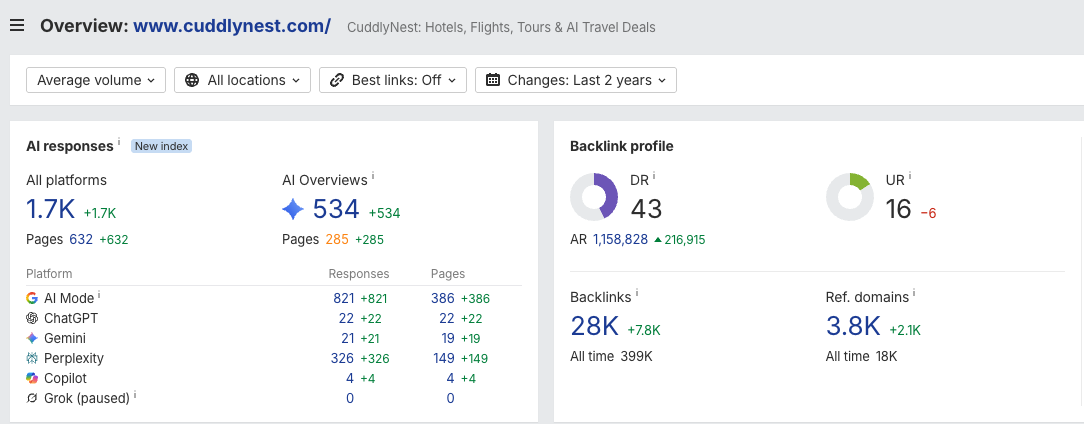
Read the case study 06CuddlyNestTravel marketplace visibility across destinations, inventory, search pages, and AI answers.
Read the case studyThe approved X0PA evidence includes 248 archived AI citations and an increase in AI-assistant sessions from 149 to 282, while conventional organic visibility was measured separately. The case shows why citations, referrals, rankings, and commercial attribution should not be collapsed into one score.
International SaaS SEO with AI-answer and referral measurement
BPO lead attribution across search and AI referrals
These current snapshots show how client pages are being found across Google AI Mode, AI Overviews, ChatGPT, Gemini, Perplexity, and Copilot. We pair that visibility with the SEO work buyers already depend on: useful pages, clear entities, technical access, credible sources, and measurement tied to the website.
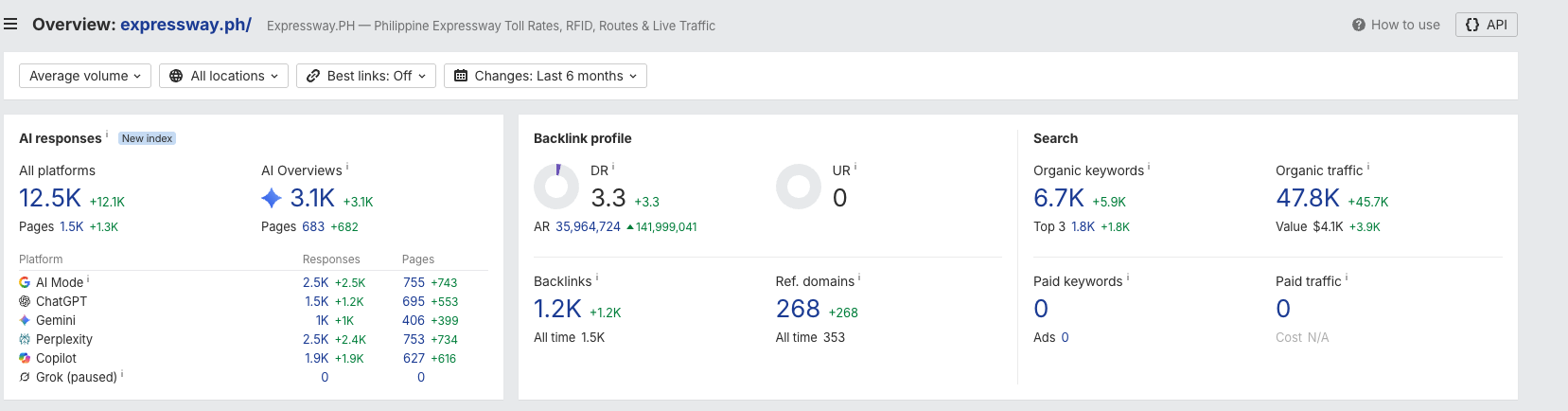
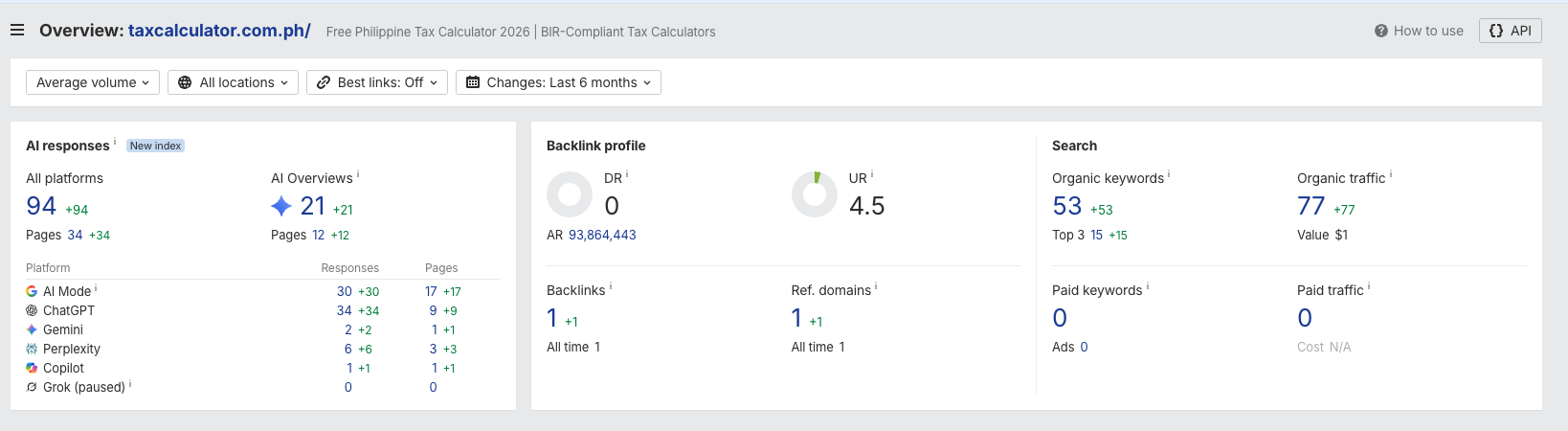
A search-first Philippine utility now appears across Google AI Mode, AI Overviews, ChatGPT, Gemini, Perplexity, and Copilot while its organic search footprint has also expanded.
Swipe or scroll to inspect the original screenshot. Tap it to open the full-size image.
A new Philippine calculator property has started earning visibility across AI answers and conventional search from a focused set of useful tax pages.
Swipe or scroll to inspect the original screenshot. Tap it to open the full-size image.
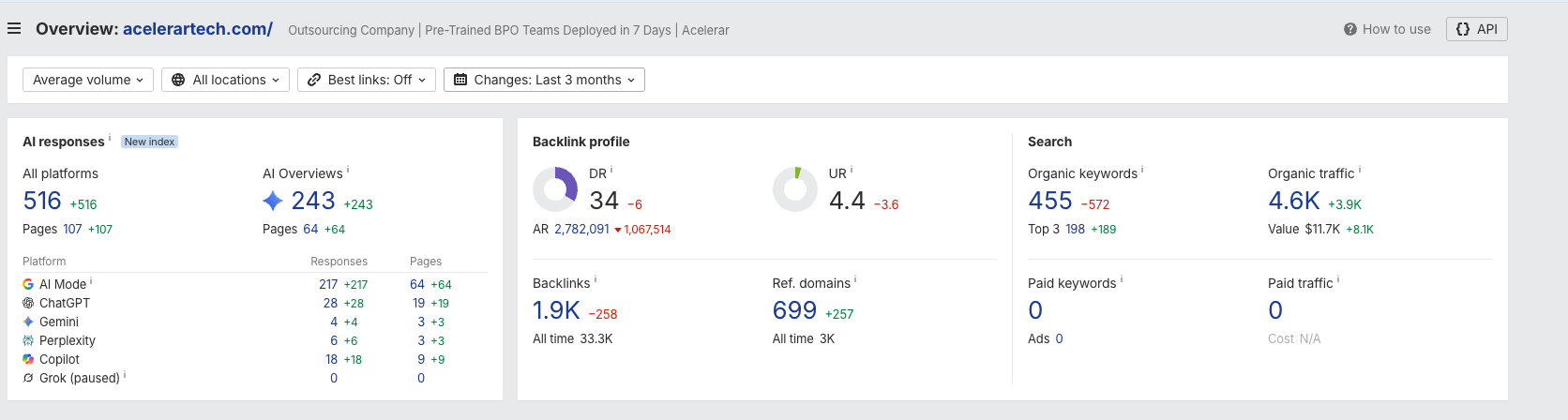
Commercial outsourcing content is being surfaced across Google AI experiences and answer engines while estimated organic traffic and top-three keyword coverage have grown.
Swipe or scroll to inspect the original screenshot. Tap it to open the full-size image.
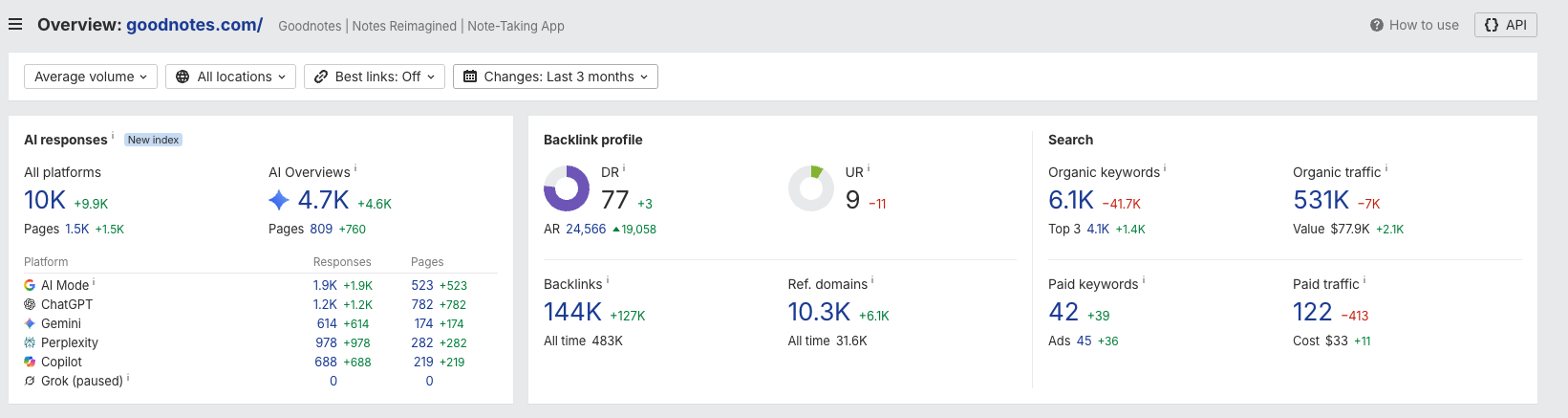
Goodnotes has a broad AI-search footprint across product, publishing, and platform pages, with thousands of responses and cited pages across the major answer engines.
Swipe or scroll to inspect the original screenshot. Tap it to open the full-size image.
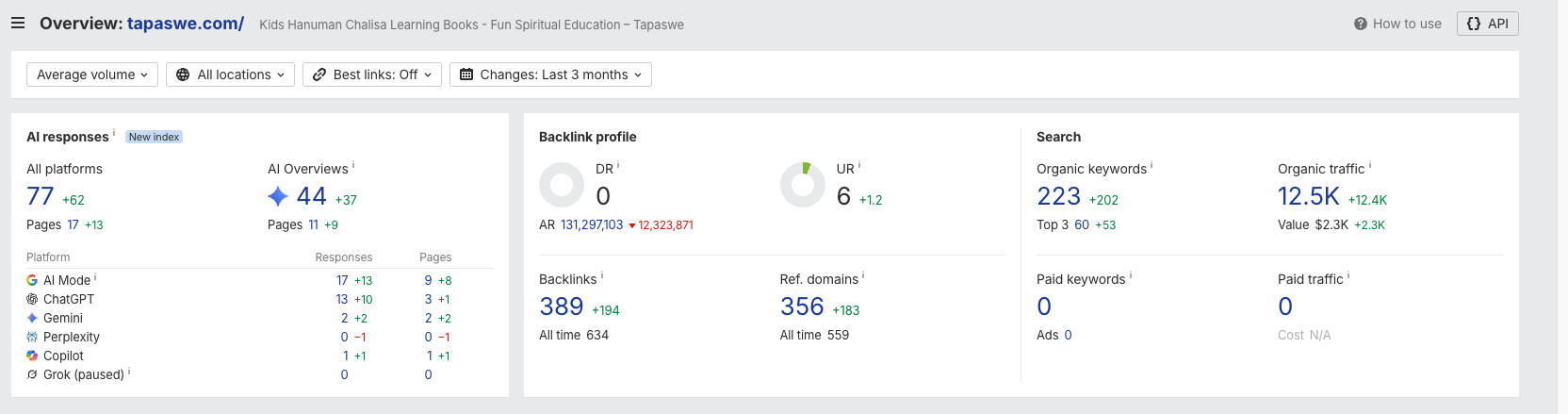
Specialist educational publishing has created both conventional search demand and a growing footprint in AI answers from a compact collection of pages.
Swipe or scroll to inspect the original screenshot. Tap it to open the full-size image.
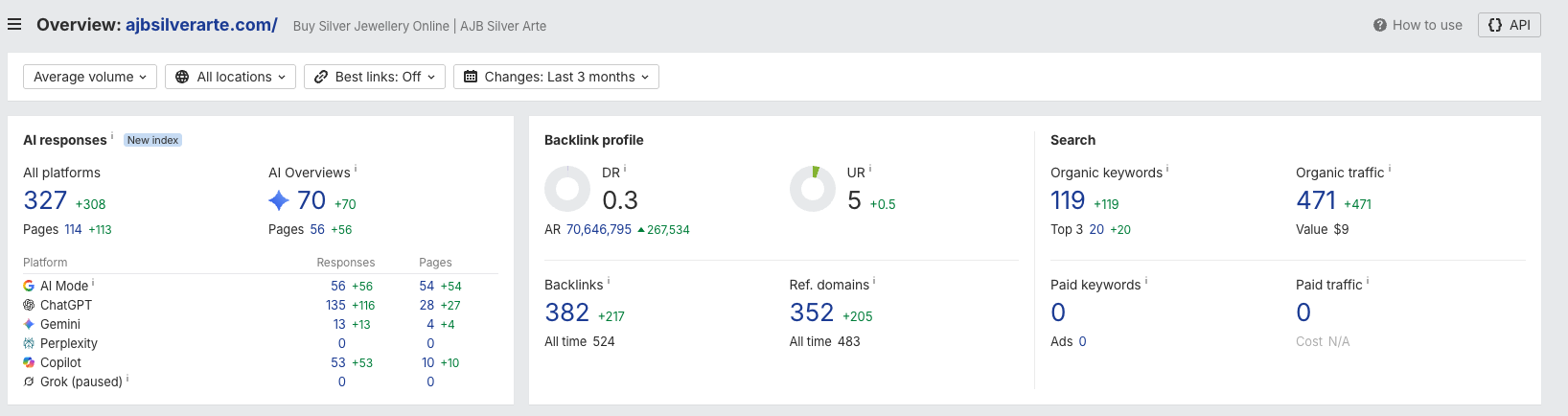
A specialist jewellery store is being discovered through product-led search and AI answers across more than one hundred pages.
Swipe or scroll to inspect the original screenshot. Tap it to open the full-size image.
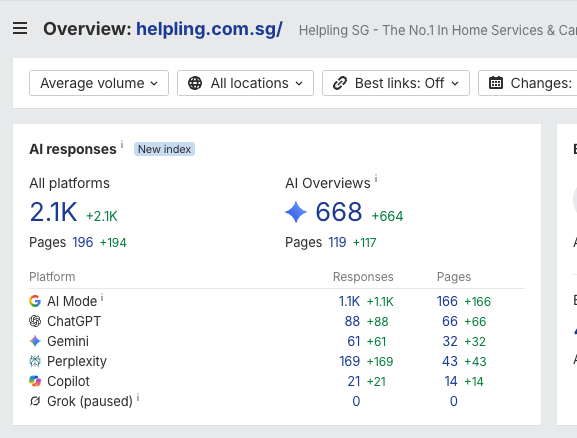
Helpling’s service and advice pages appear across the major AI answer platforms, giving customers multiple routes into the brand beyond a conventional ranking.
Swipe or scroll to inspect the original screenshot. Tap it to open the full-size image.
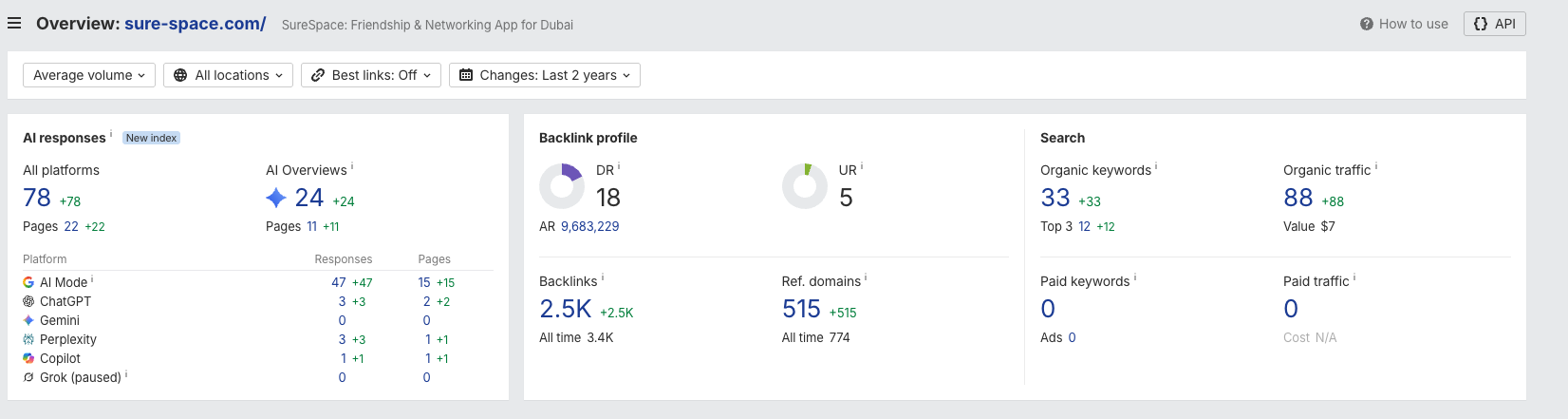
A product with a relatively small conventional search footprint is still being surfaced by Google AI Mode, ChatGPT, Perplexity, and Copilot.
Swipe or scroll to inspect the original screenshot. Tap it to open the full-size image.
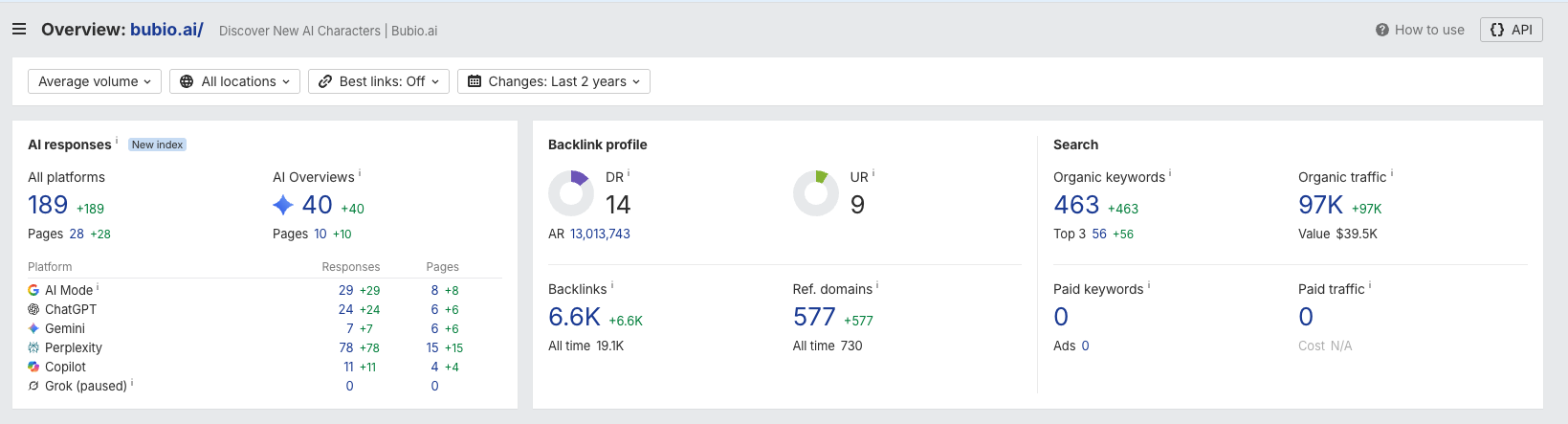
An AI-native product has built discovery across Perplexity, Google, ChatGPT, Gemini, and Copilot alongside a growing conventional search footprint.
Swipe or scroll to inspect the original screenshot. Tap it to open the full-size image.
Enterprise product, use-case, and location pages are appearing in hundreds of AI answers while top-three keyword coverage and estimated organic traffic have grown.
Swipe or scroll to inspect the original screenshot. Tap it to open the full-size image.
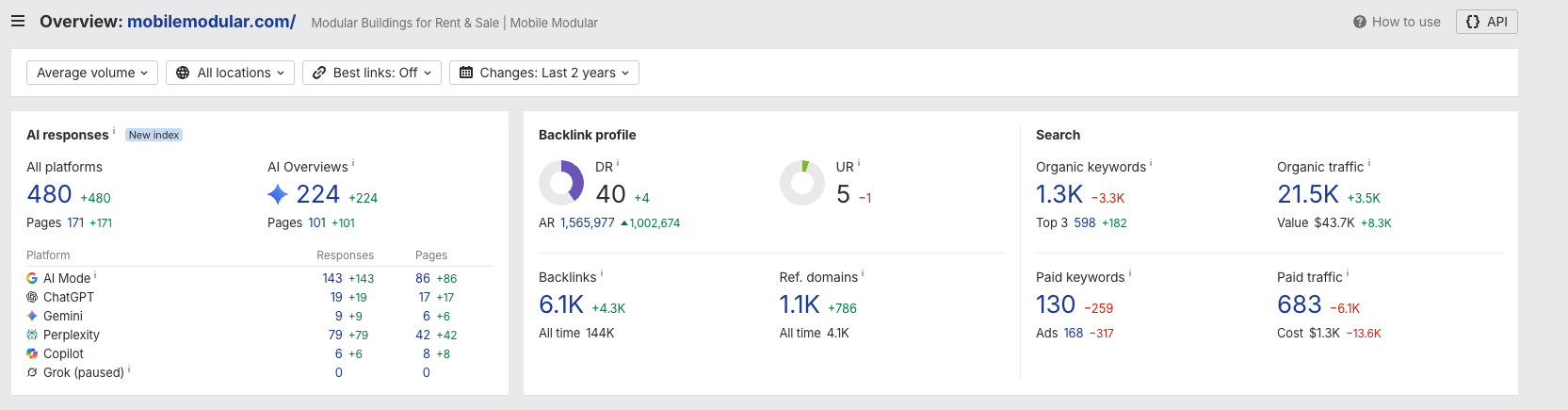
The portable-storage property is visible across five active AI platforms, with Perplexity and Google AI Mode showing the broadest page coverage in this snapshot.
Swipe or scroll to inspect the original screenshot. Tap it to open the full-size image.
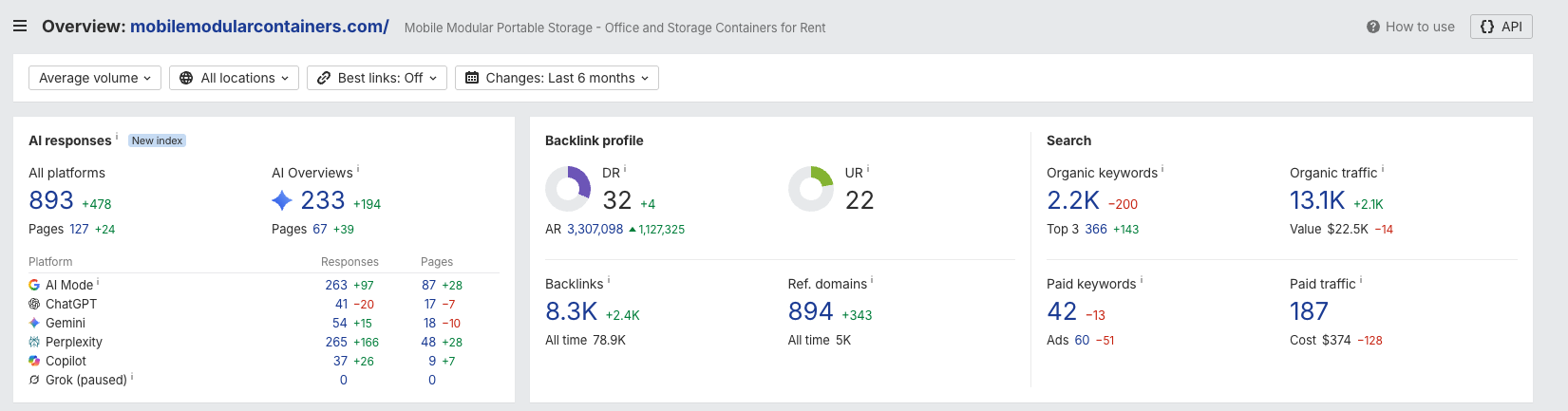
A major payments brand has broad visibility across Google AI Mode, AI Overviews, ChatGPT, Gemini, Perplexity, and Copilot, supported by thousands of discoverable pages.
Swipe or scroll to inspect the original screenshot. Tap it to open the full-size image.
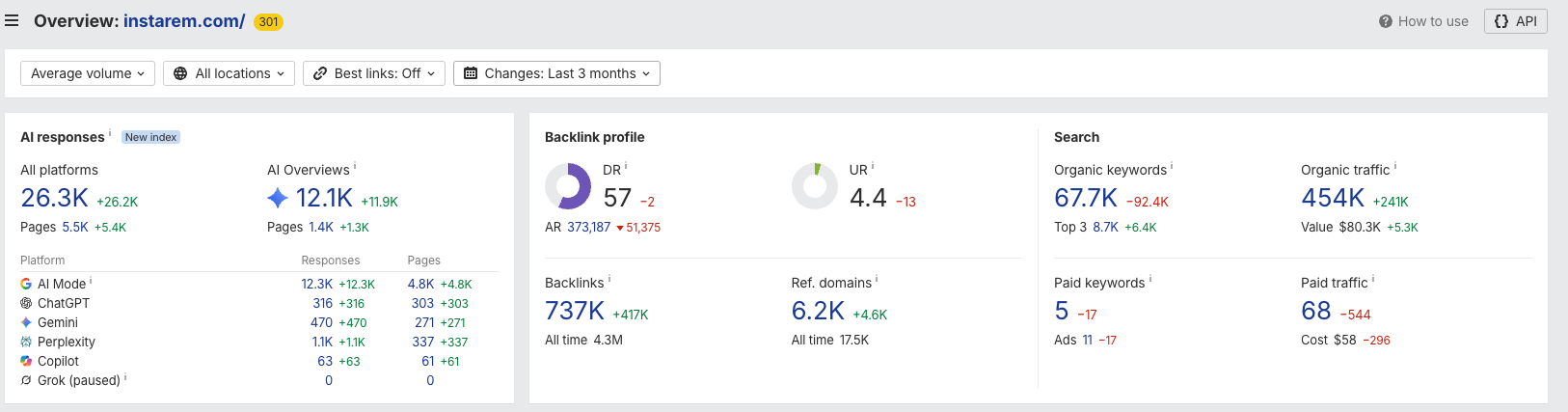
Product and advice content is being surfaced across five active AI platforms while top-three keyword coverage and estimated organic traffic have increased.
Swipe or scroll to inspect the original screenshot. Tap it to open the full-size image.
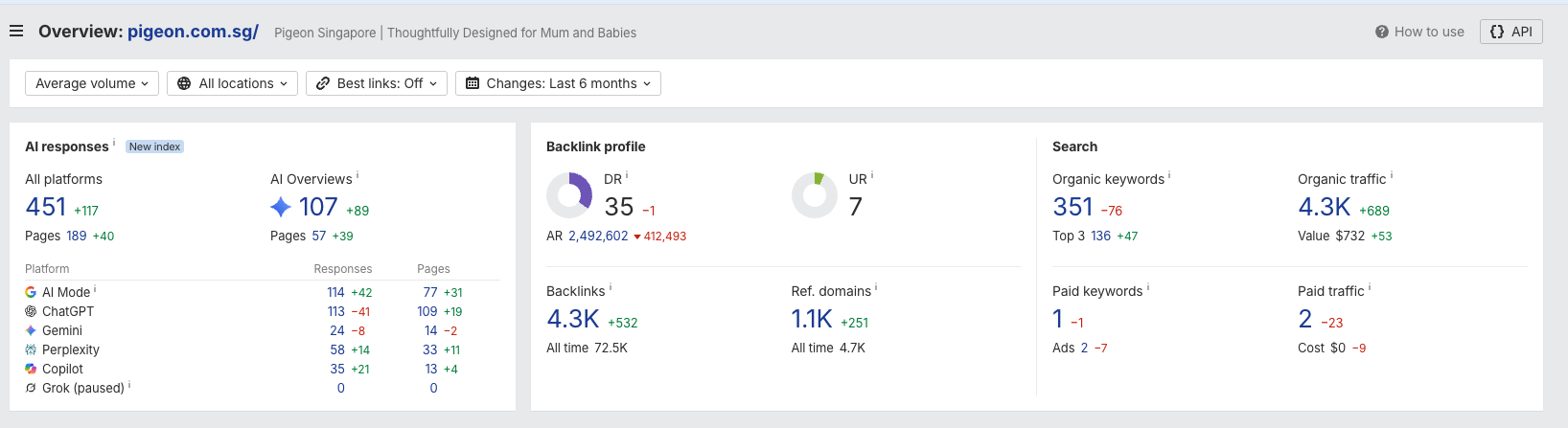
Travel inventory and destination content now appear across thousands of AI responses, with Google AI Mode and Perplexity showing the widest visibility in this capture.
Swipe or scroll to inspect the original screenshot. Tap it to open the full-size image.
“Their approach to AI SEO strategy is thoughtful, practical and grounded in what actually matters for the business. They also have a strong understanding of ecommerce, so the recommendations go beyond rankings and traffic to consider visibility, customer journeys and ultimately, commercial outcomes.”

Brand positioning and copywriting strategist
LinkedIn recommendation for Aditya Aman and his team.
“He isn't chasing rankings for the sake of rankings; he thinks about how a brand gets found, cited and trusted — by search engines and by AI answer engines alike.”

X0PA AI · SEO client
LinkedIn recommendation for Aditya Aman and TheProjectSEO, X0PA AI’s external SEO partner.
AI answers change by prompt, platform, location, and time. A useful measurement system therefore combines repeated observations with conventional search and commercial data.
Direct answers to the questions teams ask before deciding whether this work fits.
An AI SEO agency identifies the questions buyers ask, checks how a company appears across Google and AI answer platforms, improves the website pages and proof used during that research, corrects inaccurate company information, strengthens relevant external recognition, and connects visibility with website visits and qualified demand.
An AI SEO consultant identifies where a company is missing, misrepresented, or poorly supported during buyer research; decides which questions and pages matter most; and turns the findings into a prioritised plan. A consultant advises and reviews, while an agency can also provide the technical, content, authority, and analytics specialists needed to complete the work.
AI SEO is the broad programme connecting conventional SEO with visibility in AI-assisted research. GEO focuses on retrieval, representation, and citation in generative answers. AEO focuses on clear answers and question-driven surfaces. The work overlaps, so the programme should have one owner and one measurement model.
No. Schema markup is not a ranking switch for ChatGPT, Gemini, or any other AI platform. What accurate structured data can do is make the entities and relationships already visible on a page more explicit—for example, which organization provides a service, who works for it, which page describes an offer, and how related information connects. That clarity supports consistent machine understanding, but the brand still needs useful source pages, credible proof, relevant external recognition, and strong technical access to earn visibility or citations.
The work can affect homepages, service and product pages, documentation, comparisons, pricing, research, case studies, author profiles, FAQs, and help content. Important information stays on the page that best serves the buyer instead of being repeated across thin pages created for individual platforms.
Technical and content changes can be published on a normal production schedule, but answer-engine discovery and source selection follow no guaranteed timetable. We establish the baseline first, record release dates, and judge repeated changes across agreed review periods.
Yes, when an answer includes a useful link or influences later branded and direct visits. Attribution must preserve landing pages, referral sources, assisted journeys, forms, and sales qualification. A mention without a visit or commercial action remains a visibility result, not a lead.
Yes. The delivery team is based in the Philippines, while research reflects the market the client needs to win. We can assess buyer questions and sources for Philippine, US, UK, Australian, Singaporean, and other English-speaking markets.
Competitors may have clearer service pages, stronger proof, more consistent company information, better-known experts, or more credible third-party references. We compare what an answer can find and verify about each company, then close the gaps that also matter to a human buyer.
There is no submission that guarantees a citation. We improve the pages that contain the original answer, make important facts specific and easy to verify, publish useful proof and research, and earn relevant references beyond the website. We then track which sources and pages appear repeatedly.
Strong SEO is an important foundation, but it is not the whole job. AI answers may rely on different sources, combine several pages, or describe an entity from third-party information. We keep the Google programme strong while checking the additional gaps affecting AI-assisted research.
No. These can help when they are accurate and appropriate, but none is a shortcut to trust. Wikipedia and Wikidata have independent notability rules, llms.txt is an emerging convention, and schema should match visible page content. The company still needs useful pages, proof, and credible external recognition.
No. We normally improve the pages the business already needs: services, products, comparisons, pricing, documentation, research, case studies, and expert profiles. New pages are created only when a distinct buyer question deserves a useful, original answer.
The starting review usually needs the website, analytics, Search Console, relevant CRM or lead data, sales questions, existing research, and access to the people who understand the product. We agree access boundaries before work begins and only request systems needed for the scope.
Yes. We can lead the whole programme or own the search strategy while internal teams handle selected work. Each recommendation names the page, the change, the owner, and the result we will check, so work does not disappear between departments.
Useful changes can begin as soon as the highest-priority pages and technical issues are published. Changes in AI answers are less predictable because platforms refresh and select sources on their own schedules. We set a baseline, record release dates, and assess repeated movement rather than promising a fixed ranking date.
No responsible agency can guarantee a recommendation controlled by another company’s system. We can improve the accuracy, usefulness, authority, and availability of the information those systems may use, and show you what changes across a stable set of buyer questions.
We keep mentions, citations, website referrals, assisted journeys, qualified leads, opportunities, and revenue separate. That prevents a favourable screenshot from being presented as a sale and helps marketing leaders see which pages and sources are contributing to real demand.
AI-search work is scoped within the wider SEO engagement because technical SEO, content, proof, authority, and measurement are connected. Ongoing engagements currently start at US$3,000 per month, with the right scope depending on markets, website complexity, internal capacity, and the amount of implementation required.
The strongest fit is a company with a real product or service, credible expertise, and buyers who research before purchasing. SaaS, B2B, ecommerce, fintech, travel, marketplaces, healthcare, local services, and enterprise websites can all benefit when AI-assisted research affects discovery or evaluation.
Share your category, target market, and the questions buyers ask. We will recommend the right starting point across SEO and AI search.
Book a meeting